GST Registration Online – Complete Step-by-Step Guide for e Commerce Business
Goods and Services Tax (GST) is an indirect tax system in India that applies to most goods and services. It replaced multiple old taxes and made the tax structure more transparent and organized. If you are starting a business or planning to sell products or services, understanding GST registration is very important.
Who Needs GST Registration?
GST registration depends on your business type and annual turnover. If your business crosses a certain turnover limit, registration becomes mandatory.
For Goods Suppliers:
- Most states: Registration required if turnover exceeds ₹40 lakh per year.
- Special category states: Registration required if turnover exceeds ₹20 lakh.
For Service Providers:
- Most states: Registration required if turnover exceeds ₹20 lakh.
- Special states: Registration required if turnover exceeds ₹10 lakh.
If you fall under these limits, GST registration is not optional — it becomes compulsory.
Documents Required for GST Registration
- PAN Card of business or individual
- Aadhaar card
- Business address proof
- Bank account details
- Electricity bill or rental agreement

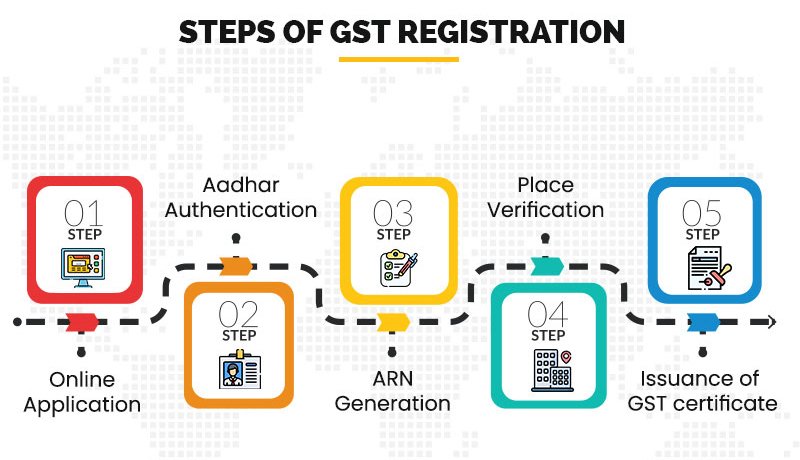
Step-by-Step Online GST Registration Process
Step 1: Visit Official GST Portal
To begin the GST registration process, open your web browser and visit the official government portal at gst.gov.in. Always ensure that you are using the authentic GST website to avoid any confusion or incorrect information.
Step 2: Click on New Registration
On the homepage, go to the “Services” section, then choose “Registration,” and click on “New Registration.” From the options provided, select “Taxpayer” to continue.
Step 3: Enter Basic Details
Make sure to type your legal business name exactly as mentioned on your PAN records. After that, enter your PAN number, a working email ID, mobile number, and select the correct state and district where your business is located.
Step 4: OTP Verification
After submitting your details, an OTP will be sent to both your email address and mobile number. Enter the received OTP carefully to verify your information and proceed to the next step.
Step 5: Temporary Reference Number (TRN)
After successful verification, you will receive a Temporary Reference Number (TRN). This number is important, so keep it safe because it allows you to log back in and proceed with the remaining steps of your GST application.
Step 6: Complete the Application Form
At this stage, you will need to provide complete and accurate details about your business. Make sure all information matches your official documents to avoid delays in approval. The form is divided into different sections where you must carefully fill in the required information.
- Business Details: Basic information such as trade name, business constitution, and commencement date.
- Partner or Promoter Details: Information about the owner, partners, or directors including identity and contact details.
- Authorized Signatory: Details of the person who is authorized to file GST returns and manage GST-related activities.
- Principal Place of Business: The main business address where primary operations are conducted.
- Additional Business Locations: Information about any branch offices, warehouses, or additional places of operation.
- Goods and Services Details: Description of the products or services your business intends to supply.
- Bank Details: Active bank account information where GST-related transactions and refunds will be processed.
Step 7: Aadhaar Authentication
Complete the Aadhaar authentication process to speed up the approval of your GST registration.
Step 8: Submit Application
Once all details are filled in, complete the submission process by digitally signing the application. Companies are required to use a Digital Signature Certificate (DSC), while individual applicants can verify using the e-sign facility.
Step 9: ARN Generation
Once you submit your GST registration application successfully, the system generates an Application Reference Number (ARN). This ARN is very important because it works as a tracking ID for your GST application. It confirms that your application has been submitted and is under review.
Step 10: What Happens After You Receive the ARN Number?
After receiving the ARN, your application goes to the GST department for verification. You can track the current status anytime by visiting the official GST portal and entering your ARN under the “Track Application Status” section. The portal will show whether your application is under processing, approved, or if any clarification is required.
Step 11: How Long Does GST Verification Take?
In most normal cases, GST registration approval takes around 3 to 7 working days. However, the time may vary depending on the accuracy of your documents and the workload of the department. If all details are correct and Aadhaar authentication is completed successfully, approval is usually faster.
Step 12: Will a GST Officer Visit Your Business Address?
In certain situations, the GST department may decide to conduct physical verification. This does not happen in every case. Physical verification is generally done if:
- There is a mismatch in the documents submitted.
- The business address details appear unclear.
- Aadhaar authentication was not completed.
- Additional verification is required by the department.
If a physical visit is required, a GST officer may visit your declared principal place of business. The purpose of this visit is simply to verify that the business actually exists at the registered address.
Step 13: What Should You Keep Ready?
To avoid delays, make sure you keep the following available:
- Copy of GST application
- Business registration documents
- Rent agreement or property ownership proof
- Utility bill
- PAN and Aadhaar copy
If everything matches the submitted details, the officer submits a verification report and your GST registration is approved shortly after.
Step 14: Final Approval and GSTIN Generation
Once the verification process is completed and approved, your GST Identification Number (GSTIN) is generated. You can download your GST registration certificate directly from the GST portal. From that point onward, your business becomes legally registered under GST and you can start issuing GST invoices and claiming input tax credit.
The key to smooth approval is accurate documentation and correct business details. If everything is genuine and properly submitted, the process remains simple and stress-free.

Benefits of GST Registration for E-Commerce Sellers
- Trusted Online Business Identity: GST registration gives your online store a proper legal identity, which builds trust with customers and marketplaces.
- Sell Across India Without Restrictions: With GST, you can supply products to customers in different states without facing tax-related issues, making nationwide selling easier.
- Claim Input Tax Credit: You can adjust the GST paid on raw materials, packaging, and other business expenses against your output tax, helping reduce overall costs.
- Eligibility to Sell on Marketplaces: Most major e-commerce platforms require GST registration for sellers, especially in taxable categories.
- Professional Image & Growth Opportunities: A GST-registered business appears more organized and reliable, which can help in partnerships, bulk orders, and business expansion.
Final Thoughts
Starting your GST registration online may feel confusing in the beginning, especially if you are new to business compliance. However, once you understand the step-by-step GST registration process, it becomes much easier to handle. The key is to keep your documents ready, enter accurate business details, and carefully complete each stage on the GST portal.
For e-commerce sellers and small business owners in India, GST registration is not just a legal requirement — it is a strong foundation for long-term growth. A GST-registered business can sell across states, build customer trust, and operate professionally on online marketplaces.
If you are serious about starting or expanding your online business, completing your GST registration is an important milestone. Take your time, follow the correct process, and once your GSTIN is approved, you will be fully compliant and ready to scale your business with confidence.
← Back to Articles